

Laos Powder Conveying Pump - The Recommended Equipment for Powder Material Transport
Dust pollution in Laos primarily occurs in the following scenarios:
1. **Construction Sites**: The rapid development and urbanization have led to numerous construction projects, which generate significant amounts of dust through activities such as excavation, demolition, and material handling.
2. **Industrial Activities**: Factories and industrial plants, especially those involved in mining, cement production, and wood processing, release large quantities of dust into the atmosphere.
3. **Agricultural Operations**: Dry weather conditions combined with tilling, planting, and harvesting activities can result in substantial dust emissions from agricultural fields.
4. **Road Dust**: Unpaved roads and highways contribute to dust pollution due to vehicular movement, particularly during dry seasons when there is less moisture to suppress dust particles.
5. **Open Burning**: Practices such as slash-and-burn agriculture, burning of waste, and forest fires release particulate matter into the air, adding to the dust problem.
6. **Natural Events**: Dust storms originating from neighboring countries like China or natural events like droughts can exacerbate dust pollution levels within Laos.
7. **Urban Areas**: In cities, vehicle exhaust, road traffic, and human activities also contribute to the overall dust load in the environment.
These scenarios collectively contribute to the dust pollution experienced in Laos, affecting air quality and public health.

Sure, here's a brief introduction and explanation of the working principle of a powder conveying pump in English:
---
### Introduction to Powder Conveying Pump
A powder conveying pump is a type of equipment designed to transport dry powdered materials from one location to another. These pumps are commonly used in various industries such as pharmaceuticals, food processing, chemical manufacturing, and more. They offer an efficient, dust-free, and contamination-free method for handling dry bulk solids.
### Working Principle
The basic working principle of a powder conveying pump involves creating an airflow that carries the powdered material through a pipeline from the source to the destination. Here’s a step-by-step breakdown of how it works:
1. **Air Supply**: An air blower or compressor generates a stream of high-velocity air. This airflow acts as the medium to carry the powder.
2. **Material Introduction**: The powdered material is introduced into the conveying line at the inlet point. This can be done through feeders like screw conveyors, rotary valves, or other metering devices.
3. **Conveying Process**: The high-velocity air entrains the powder particles, suspending them within the air stream. This mixture of air and powder travels through the pipeline under positive pressure.
4. **Separation**: At the delivery point, the air-powder mixture enters a separation device such as a cyclone or filter. The separation device slows down the airflow, allowing the heavier powder particles to settle and collect, while the air is expelled back into the atmosphere or recirculated.
5. **Control Systems**: Modern powder conveying systems often incorporate control mechanisms to regulate air pressure, flow rates, and material feeding rates to ensure consistent and efficient operation.
By utilizing this principle, powder conveying pumps can handle a wide range of powdered materials including fine powders, granules, and pellets, making them versatile tools in industrial processes.
---
This summary provides a clear and concise overview of what a powder conveying pump is and how it operates, adhering to proper language, grammar, and formatting conventions.
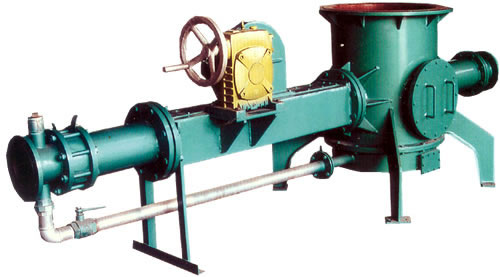
To ensure that the powder conveying pump can solve the transportation problems of coal plants, several key factors must be considered:
1. **Material Compatibility**: Ensure that the materials used in the construction of the pump are compatible with the type of coal being transported. This includes considering abrasion resistance and chemical compatibility to prevent wear and corrosion.
2. **Pump Design**: The design of the pump should be suitable for handling the specific characteristics of coal powder, such as its density, particle size distribution, and moisture content. A well-designed pump will efficiently handle these variables without clogging or loss of material.
3. **Flow Rate and Pressure**: The pump must be capable of delivering the required flow rate and pressure to move the coal powder effectively through the pipeline. This requires careful calculation and selection of the pump's specifications to match the system's demands.
4. **Pipeline Design**: The design of the pipeline, including its diameter, length, and layout, plays a crucial role in ensuring efficient and reliable transportation. Proper planning can minimize pressure drops and reduce the risk of blockages.
5. **Maintenance and Cleaning**: Regular maintenance and cleaning schedules should be established to prevent buildup and ensure the longevity of the equipment. This includes monitoring wear components and replacing them as needed.
6. **Safety Features**: Incorporate safety features such as pressure relief valves, emergency stop buttons, and proper ventilation to protect operators and prevent accidents.
7. **Automation and Control Systems**: Implement advanced automation and control systems to monitor and adjust the operation of the pump in real time. This can optimize performance, reduce energy consumption, and improve overall efficiency.
8. **Testing and Calibration**: Before full-scale implementation, conduct thorough testing and calibration of the entire system to ensure it meets all operational requirements and performs reliably under various conditions.
By addressing these factors, you can ensure that the powder conveying pump is an effective solution for solving the transportation challenges faced by coal plants.
While pursuing economic benefits we must pay attention to environmental protection issues The emergence of powder conveying pumps provides a viable solution to this contradiction By reducing pollution emissions and energy consumption during material transportation powder conveying pumps are not only beneficial for environmental protection but also for the sustainable development of enterprises Therefore promoting and applying powder conveying pumps is an indispensable step on our journey towards environmental protection