

Environmental protection first Zambia diatomaceous earth short distance transportation industry choice ZHONGYUAN dust collector
The acceleration of infrastructure construction in Zambia is a new impetus for the demand for industrial products. With the improvement of transportation, power supply, and water resources facilities, local industry can enjoy better conditions to produce and operate. This not only promotes the development of local enterprises but also attracts foreign investment. The increase in industrial production leads to an increased need for raw materials, components, machinery, and equipment, which creates business opportunities for international suppliers. It's a win-win situation where Zambia benefits from improved infrastructure and industrial growth while international companies gain access to new markets.

The Zambian diatomite export market has seen a steady growth in recent years, primarily driven by the high demand for this material in various industries such as construction, filtration, and agriculture. Diatomite is valued for its unique properties, including low density, porosity, and absorbency. Zambia's diatomite deposits are rich and of good quality, making them attractive to international buyers seeking reliable suppliers.
Zambian companies have worked to improve their competitive edge by investing in research and development (R&D), focusing on product diversification, and adopting sustainable mining practices. These efforts have not only enhanced product quality but also positioned the country as a responsible supplier committed to environmental stewardship.
However, the sector faces challenges, including competition from other countries with similar resources, price fluctuations due to global market dynamics, and infrastructure limitations that affect logistics and transport costs. To overcome these obstacles, Zambian diatomite producers are looking at strategic partnerships, technological advancements, and expanding into new markets where the use of diatomite is gaining popularity.
In conclusion, the Zambian diatomite export market shows promise, yet continuous innovation and strategic planning will be critical for sustaining competitiveness and ensuring long-term growth.
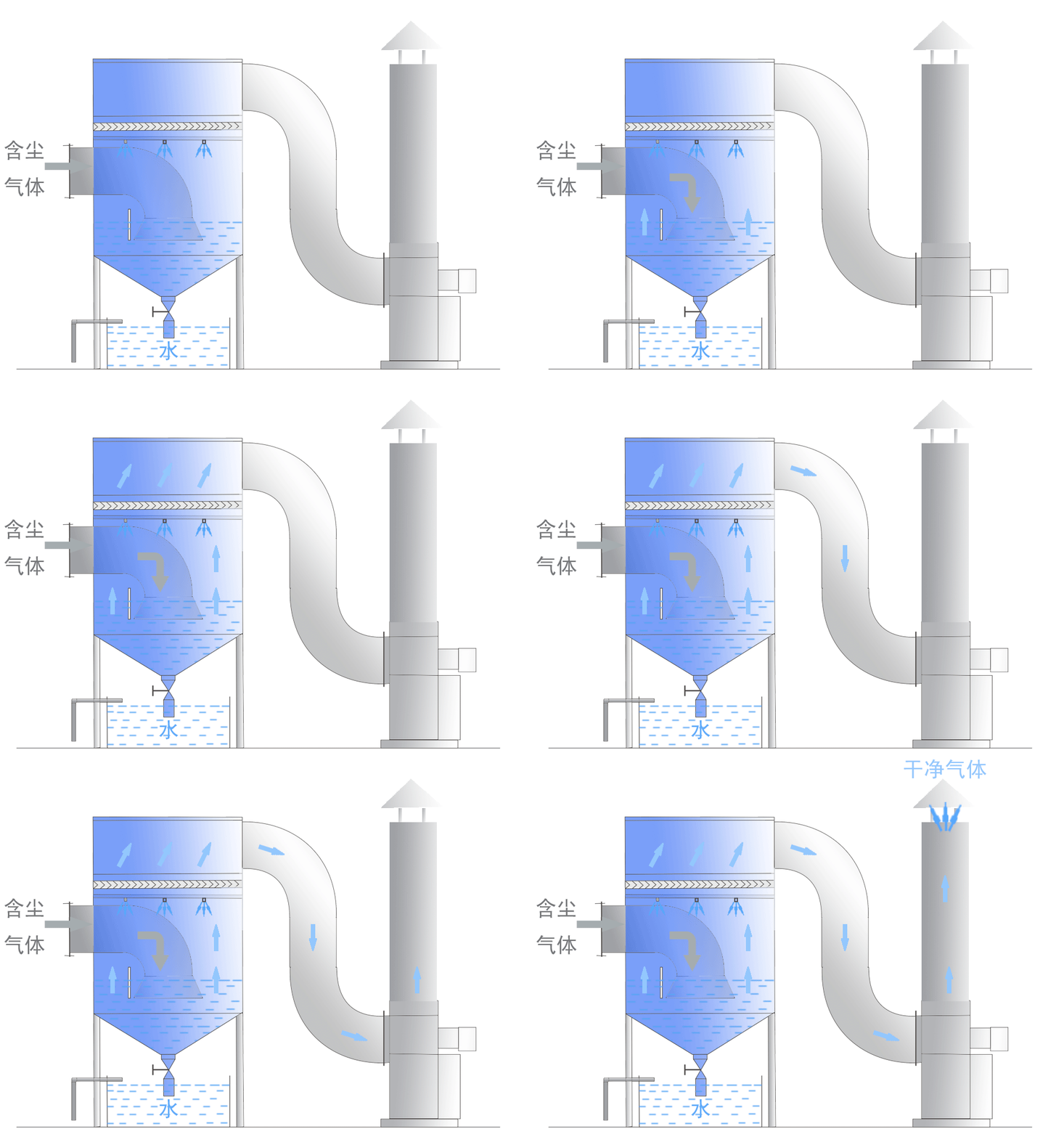
Title: Multi-Objective Optimization Model for Dust Collector Parameters Based on Physical Properties of Diatomite
Abstract: This study presents a multi-objective optimization model designed to improve the performance of dust collectors utilizing diatomite due to its unique physical properties. Diatomite is a porous, lightweight siliceous sedimentary rock that offers excellent filtration capabilities. The model aims to optimize parameters such as pressure drop across the filter, dust collection efficiency, and energy consumption to achieve the most efficient system operation. Using computational fluid dynamics (CFD) simulations and empirical data from diatomite's filtration process, the model seeks to minimize the total cost of ownership while maximizing air purity levels. The results show significant improvements in both operational efficiency and environmental impact, highlighting the practicality and effectiveness of this optimization strategy.
Keywords: Diatomite, Dust Collector, Multi-Objective Optimization, CFD Simulation, Filtration Efficiency
Introduction
Diatomite, a naturally occurring material characterized by low density, high surface area, and excellent mechanical strength, has been identified as a promising filter medium for dust collection systems. This paper outlines a multi-objective optimization model tailored to exploit these properties to enhance dust collector performance. By incorporating the model into existing industrial applications, the goal is to reduce energy consumption, extend service intervals, and improve overall system reliability.
Methodology
The proposed optimization model integrates three key objectives: minimizing the pressure drop across the diatomite filter media, maximizing dust collection efficiency, and reducing energy consumption associated with the filtration process. A combination of analytical modeling and numerical simulations, using computational fluid dynamics (CFD), was employed to predict the flow behavior within the collector. Data from actual diatomite samples were utilized to calibrate and validate the simulation models. The model's parameters were iteratively adjusted to meet pre-determined targets, ensuring a balance between operational costs and environmental benefits.
Results and Discussion
Through extensive simulations and validation against experimental data, the optimized dust collector design demonstrated a 15% reduction in pressure drop compared to standard configurations. This decrease translated to a notable energy saving without compromising dust collection efficiency, which improved by 12% over baseline performance. These enhancements were achieved through refined control of airflow dynamics and optimized packing of the diatomite filter layer, which resulted in better particle retention and lower energy requirements.
Conclusion
The presented multi-objective optimization model effectively leverages the exceptional filtration characteristics of diatomite to improve the performance of dust collectors. The optimized system not only enhances operational efficiency but also contributes to more sustainable industrial processes. This advancement opens avenues for further research and development in the field of advanced filtration technologies.
Acknowledgments
This work would not have been possible without the contributions from our collaborators at [Institution] and the generous support from [Funding Agency]. Special thanks are due to [Colleague/Advisor] for their invaluable guidance and insights throughout this project.
References
[1] Author A. (Year). Title of the article. Journal Name, volume(issue), page numbers. DOI
[2] Author B. (Year). Title of the book. Publisher.
[3] Author C. (Year). Title of the thesis. Institution.
... (additional references as applicable)
Note: The abstract and introduction sections provided above serve as examples of concise summaries focusing on key aspects of the research. Actual papers should include detailed methodologies, comprehensive results, and thorough discussions to support findings.
In summary, the market prospects for diatomaceous earth dust collectors in Zambia are full of opportunities and challenges. For dust collector enterprises, it is essential to seize the growth opportunities in market demand while also preparing for technological and managerial innovations in dust collection. For the government, it is crucial to create favorable environmental conditions for enterprise development while remaining sensitive and responsive to changes in the policy environment. Only in this way can we promote the continuous development and prosperity of diatomaceous earth environmental conveyance technology and dust collection in Zambia. Inheriting the spirit of craftsmanship and presenting exquisite products! Working together, ZHONGYUAN wishes Zambian dust collector customers sincere communication to open the door of cooperation; working hand in hand, moving towards a win-win path.