

Zhongyuan Assists Lesotho Low Pressure Pneumatic Conveying Pump Customers to Reduce Costs and Increase Efficiency
Lesotho, officially known as the Kingdom of Lesotho, is a landlocked country located within the borders of South Africa. It has an area of approximately 30,355 square kilometers (11,720 sq mi) and is entirely surrounded by its much larger neighbor, making it the only independent state in the world that is completely enveloped by another country. The capital and largest city is Maseru.
Geographically, Lesotho is characterized by high mountains and deep valleys, with the Maloti Range forming part of the Drakensberg Mountains, which run along much of its eastern border with South Africa. The highest point in the country is Thabana Ntlenyana at 3,482 meters (11,424 ft), which also happens to be the highest peak in Southern Africa outside of Tanzania. This topography contributes to Lesotho's nickname, "Kingdom in the Sky."
Historically, the region that makes up modern-day Lesotho was inhabited by the Basotho people, who have their origins in the Bantu migrations that took place over a thousand years ago. During the early 19th century, King Moshoeshoe I united various clans and established the Basotho kingdom, which later faced challenges from European colonial powers. In 1868, Britain formally annexed Basutoland (as Lesotho was then known) to protect it from Boer incursions. After achieving independence from British rule on October 4, 1966, the country adopted its current name, Lesotho, meaning "the land of the Sesotho-speaking people."
Economically, Lesotho's Gross National Product (GNP) reflects its status as a developing nation. With a predominantly agricultural sector, the economy relies heavily on livestock breeding and the cultivation of crops such as maize, wheat, and sorghum. However, the mining of diamonds, which started in the 1960s, plays a significant role in the country's export earnings and overall GDP. Moreover, Lesotho has made efforts to diversify its economy through the development of textile manufacturing, which benefits from trade agreements like the African Growth and Opportunity Act (AGOA) with the United States.
In terms of human development, Lesotho faces challenges including poverty, HIV/AIDS prevalence, and a relatively young population with a high dependency ratio. Despite these obstacles, the government has been working towards improving living standards and promoting sustainable economic growth. Education and health care are key areas of focus, with initiatives to increase access to quality schooling and healthcare services throughout the country.
As Lesotho continues to navigate its path towards socio-economic progress, maintaining stability and fostering international cooperation remains essential for long-term development. The country's rich cultural heritage, coupled with its strategic location within South Africa, offers both opportunities and unique challenges that require careful management and global engagement.

The progress and challenges in Lesotho's calcium carbonate production technology: A concise overview
Over the years, Lesotho has witnessed significant advancements in the production of calcium carbonate, a crucial ingredient in various industries ranging from construction to agriculture. The country boasts a robust mining sector that is dedicated to extracting high-quality limestone deposits. These resources are essential for the production of calcium carbonate powder, which finds extensive application in manufacturing products like paints, plastics, and paper.
Technological advancements have been pivotal in enhancing the efficiency and productivity of Lesotho's calcium carbonate industry. Advanced grinding and milling techniques enable the production of finer particle sizes, meeting specific market demands for different applications. Additionally, innovative drying processes have improved the quality of the end product by eliminating moisture content, ensuring consistent performance across various uses.
Despite these achievements, the industry faces numerous challenges. Environmental concerns loom large as the extraction and processing of limestone can have detrimental effects on the local ecosystem, particularly when it comes to water management and air pollution control. Furthermore, maintaining sustainable practices while scaling up operations remains a complex task, requiring substantial investment in eco-friendly technologies and processes.
Another challenge is the fluctuation in global demand and pricing, which can significantly impact the industry's profitability. The need for diversification into new markets and product lines becomes imperative to mitigate risks associated with market volatility.
Lesotho's calcium carbonate producers are continuously seeking ways to optimize their operations, embracing digitalization and data analytics to improve decision-making processes. By doing so, they aim to maintain competitiveness while addressing environmental and economic sustainability.
In conclusion, while Lesotho's calcium carbonate industry has made remarkable strides in terms of technological development, it continues to grapple with environmental and market challenges. The path forward involves balancing industrial growth with environmental stewardship and strategic market planning.
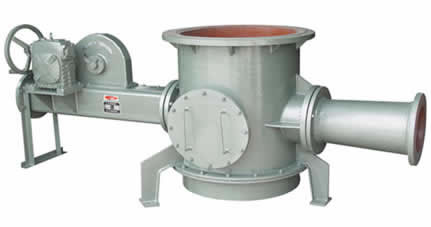
The use of low-pressure air-operated diaphragm pumps in calcium carbonate powder conveying offers several advantages. These include:
1. Ease of Operation: The low-pressure system is generally simpler to operate compared to high-pressure systems, which require more complex controls and safety mechanisms.
2. Energy Efficiency: Low-pressure systems consume less energy due to the lower pressure required for conveying the material, resulting in reduced operating costs.
3. Reduced Maintenance: Since the pump operates at lower pressures, it can have a longer service life and require fewer maintenance interventions, thus minimizing downtime and associated expenses.
4. Flexibility: Low-pressure pumps are often more flexible in terms of conveying distances as they can handle varying lengths without significant performance degradation.
5. Safety: Low-pressure systems pose a lower risk of explosion or leakage compared to their high-pressure counterparts, making them safer for handling potentially hazardous materials like calcium carbonate.
6. Versatility: Such pumps are suitable for both gravity and pressure conveying applications and can be adapted to different types of calcium carbonate products, from fine powders to coarse granules.
7. Environmental Consideration: With their lower energy consumption and potential for reduced emissions, low-pressure pumps can contribute positively to environmental sustainability efforts within the industry.
Time speaks volumes through craftsmanship. Zhongyuan innovation low-pressure pneumatic conveying pump has won the trust and support of a wide range of Lesotho customers with its exquisite technology and attentive service. Zhongyuan innovation will continue to forge ahead, building dreams for the future and making greater contributions to the development of the calcium powder industry. Fully committed, hundred percent satisfaction! Joining hands together, we wish our Lesotho customers using Zhongyuan low-pressure pneumatic conveying pumps: Here, we sincerely hope that your business thrives and your family is blessed with happiness.